Awaken to Sound: Learn Crystal Bowls With Confidence
Two-part training • April 11 + April 25 • Chicago, IL • 4 hours each day
A calm, practical beginner training in crystal singing bowls—for people who want real technique and confidence, not random “dinging.”
You’ll learn how to create clean tone, steady resonance, and a simple therapeutic flow that helps the room settle—like a long exhale you can hear.
The shift you’ll feel (simple + real)
You stop guessing and start playing with control, ease, and structure.
You learn how to guide sound like a gentle ripple—consistent, grounded, and calming.
A Quality Standard (Required Bowl Purchase)
To keep the training high-quality and consistent, each student will purchase their crystal singing bowl through Saints & Angels Healing Through Sound.
When ten people bring ten different bowls of varying quality, it creates uneven tone, volume, and response—which makes it harder to teach and harder for students to learn. This standard protects the learning environment so your sound stays clean, cohesive, and premium.
After you enroll, you’ll schedule a private bowl fitting at the studio so we can help you choose the right bowl for your body, intention, and playing style—before Day 1.
Your Private Bowl Fitting (Included with Enrollment)
After you reserve your spot, you’ll book a 1:1 bowl fitting appointment in the studio.
During your fitting, we’ll guide you through:
Choosing a bowl that’s beginner-friendly (easy to strike + sing)
Finding tone and feel that matches your intention (grounding, heart, clarity, etc.)
Selecting the right mallet(s) for your bowl
Basic care + transport so your instrument stays pristine for class and beyond
You’ll arrive on Day 1 set up for success—with an instrument that supports clean technique.
What You’ll Learn
How to get a clean strike (no harsh pinging, no unwanted overtones)
How to sing the bowl smoothly with consistent pressure and motion
Bowl placement and setup for the best resonance and stability
The difference between rhythm (grounding the body) and sustain (settling the mind)
How to build a simple therapeutic journey (opening → settling → deepening → closing)
How to listen for tone quality and pacing—so your sound feels calm and premium
A repeatable practice method so your improvement is steady between weeks
How the Two-Week Format Works
This class is split across two weeks so your hands can build skill through practice—without rushing.
Day 1 — April 4: Foundations + Technique
You’ll learn the fundamentals, practice with coaching, and leave with a clear at-home practice plan.
Home Practice (1–2 weeks): Build Consistency
Short, repeatable sessions help you develop muscle memory and steady tone.
Day 2 — April 18: Integration + Confidence
We refine technique, correct small habits, and help you play a full mini-journey with feedback—so you leave grounded and ready to keep practicing.
Who This Is For / Who This Isn’t For
Who this is for
Beginners who want to learn bowls the right way: calm, clean, intentional
Wellness-minded people who want a skill for self-care and grounding
New practitioners who want a strong foundation with real structure
People who want to stop “trying sounds” and start guiding a simple sound journey
Who this isn’t for (kindly)
Anyone looking for a fast “certification” to market themselves immediately
Advanced players seeking complex music theory or performance training
People who want to bring a random mix of bowls into a group setting
Anyone unwilling to practice between sessions (this format works because you practice)
Sample 4-Hour Agenda (Day 1 — April 4)
Arrival + grounding
Breath + listening exercise to calibrate your ears and body to “clean tone.”
Bowl care + setup
Placement, posture, mallets, stability, handling, and setup that supports resonance.
Striking technique (clean tone)
Angle, contact point, speed, and control—how to avoid harshness and keep the tone pure.
Singing technique (smooth resonance)
Motion, pressure, starting/stopping cleanly, and finding your bowl’s sweet spot.
Break
Rhythm vs sustain
When to pulse and when to hold—how each affects the body and the room.
Therapeutic journey basics
A simple sequencing model: opening → settling → deepening → closing.
Integration + home practice plan
Exactly what to practice between weeks (and what to listen for).
Sample 4-Hour Agenda (Day 2 — April 18)
Arrival + tone reset
Quick listening and technique reset to start clean and centered.
Technique refinements
We correct small habits that create wobble, squeaks, uneven volume, or fatigue.
Practice cycles + feedback
Short guided play rounds with coaching and clear adjustments.
Sequencing + transitions
How to move smoothly between tones so your playing feels like one continuous wave.
Break
Play a full mini-journey (supported)
You’ll practice guiding a simple, intentional bowl journey from start to close.
Troubleshooting + Q&A
Common issues: squeaks, overplaying, tone harshness, pacing, fatigue, confidence.
Closing integration
Seal the learning and set your next 30 days of practice.
What to Bring / What’s Provided
What to bring
Comfortable clothing
Water (closed-lid preferred)
Notebook or notes app
Your Saints & Angels bowl + mallet(s) (selected during your fitting)
What’s provided
A calm, premium studio environment
Hands-on coaching and technique correction
Sequencing frameworks + practice plan
Any class handouts/checklists used during training
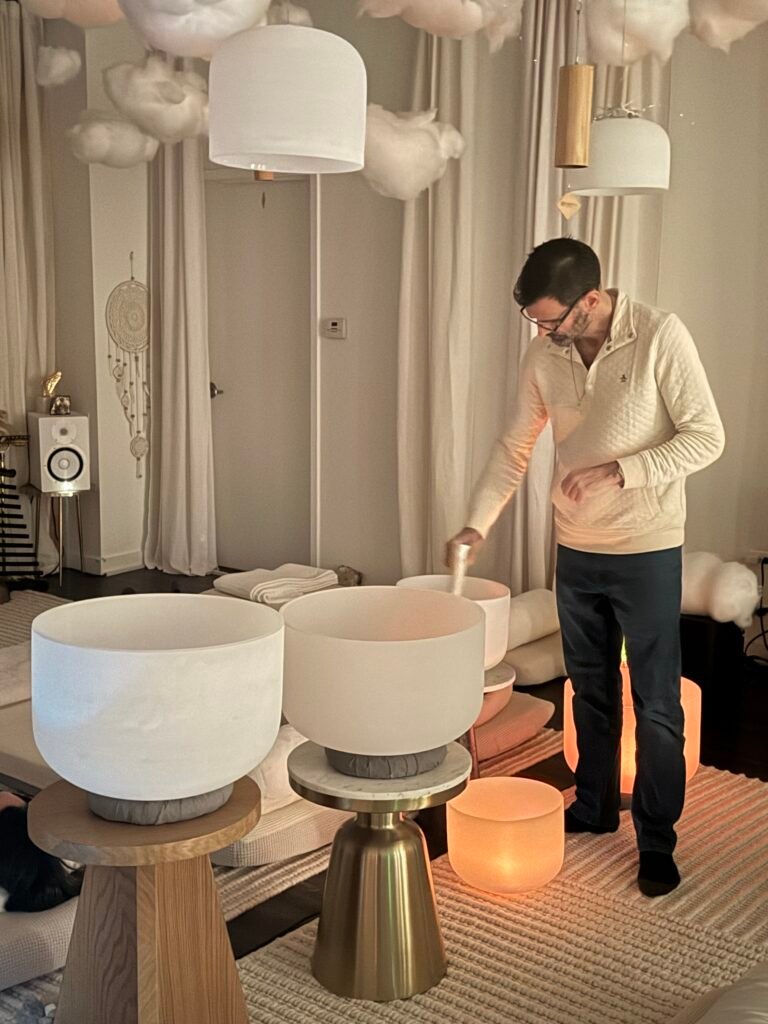
About Peter
Peter Canellis is the founder of Saints & Angels Healing Through Sound in Chicago. His approach blends grounded musicianship with nervous-system-friendly pacing—so the experience feels calm, clean, and intentional.
This training is not about performance or perfection. It’s about learning how to create consistent resonance with simple structure—so your sound feels safe, steady, and real.
Feel it to Heal it.
FAQ
Do I need my own bowl?
Yes. A crystal singing bowl purchase through Saints & Angels is required for this Level 1 course.
This keeps the class consistent and ensures everyone is learning on bowls that respond well and sound clean together.
Can I take this if I’m brand new?
Yes. This course is designed for beginners and curious wellness people who want a clear method and real coaching.
Can I bring a bowl I already own?
For Level 1, we keep the instruments consistent—so outside bowls aren’t used in class.
If you already have a bowl you love, bring it to your fitting and we’ll evaluate it and recommend the best path forward.
What happens after I sign up?
You’ll schedule your private bowl fitting appointment at the studio. We’ll make sure you’re matched with the right bowl and mallet(s) before Day 1.
What if I miss the second date (April 18)?
The two-week structure is designed as a complete experience. If you miss Day 2, you’ll miss the integration and feedback that ties everything together. If something unavoidable comes up, reach out and we’ll talk through the cleanest option available.
Will this certify me?
This is a Level 1 completion training in crystal singing bowl fundamentals. It is not a clinical license and does not make you a licensed therapist. It’s an introductory foundation you can build on responsibly.
Is this spiritual or science-based?
Both, in a respectful way.
Science-informed: technique, acoustics, pacing, attention, and relaxation support.
Tradition/spiritual: you’re welcome to bring your own intention and meaning. Nothing is forced, and we avoid medical claims.
How do I practice between weeks?
You’ll get a simple plan (10–20 minutes per session) focused on clean tone, controlled starts/stops, and basic sequencing. The goal is consistency so your hands build muscle memory.
Is this a music theory class?
No. This is a practical, beginner technique class for wellness-style playing. Simple, usable, confidence-building.
How many spots are available?
Spots are limited so the room stays calm and so each student gets hands-on feedback (not a crowded lecture).
Limited spots to keep the training personal, quiet, and hands-on—with real coaching and time to practice.